
AI Video Model Comparison
MiniMax H3 vs Veo 3.1: Specs, Pricing, and Which One to Pick
Published September 7, 2026
Share this article
MiniMax H3 vs Veo 3.1 is the open-weight challenger against the establishment champion. MiniMax H3, released July 31, 2026 by MiniMax, is a 33B open-weight multimodal model known for 2K output, editing control, and aggressive pricing. Veo 3.1 is Google's flagship video model, introduced in October 2025 through the Gemini API, known for cinematic text-to-video realism and polished native audio.
The two models rarely lose to each other in the same category. Veo 3.1 still sets the bar for pure-text cinematic motion and physics; MiniMax H3 wins on resolution, image-to-video adherence, editing, clip length, ecosystem openness, and — by a wide margin — price. This guide breaks down where each model earns its keep, with the spec table and per-second cost math you need to decide.
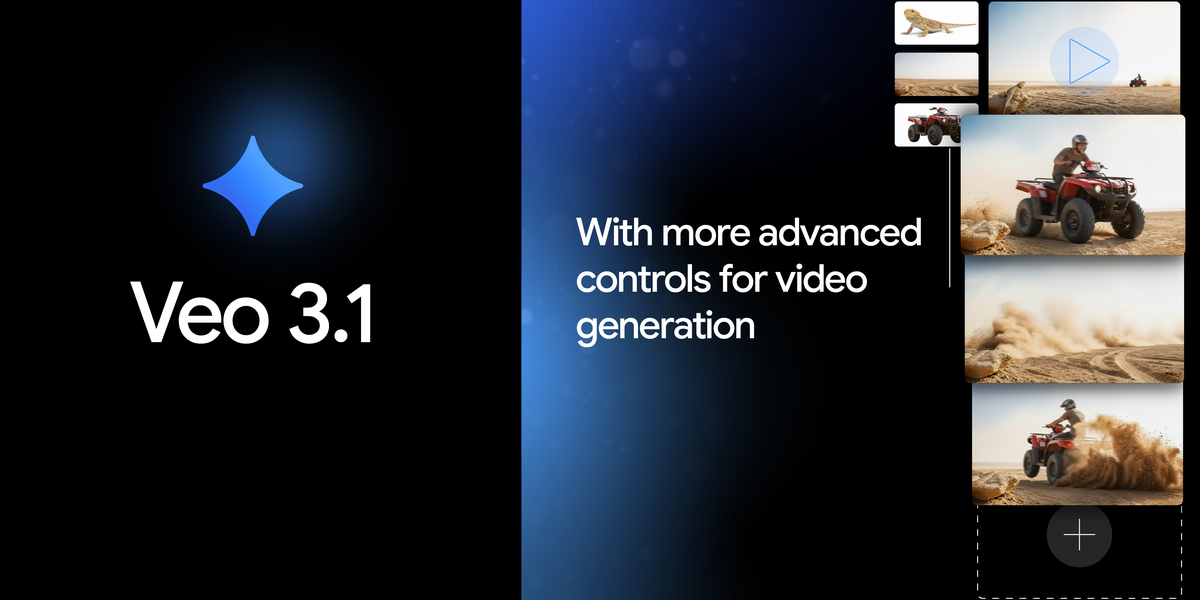
MiniMax H3 vs Veo 3.1: Quick Comparison
| MiniMax H3 | Veo 3.1 | |
|---|---|---|
| Developer | MiniMax | |
| Released | July 31, 2026 | October 2025 (Gemini API) |
| Max resolution | 2K native at 24fps (4K on fal.ai) | 1080p at 24fps |
| Clip length | Up to 15 seconds | 4, 6, or 8 seconds, extendable via scene extension |
| Input modes | Text, image, first/last frame, reference (Ref2VA), video-to-video editing | Text, image, reference ingredients, first/last frame control |
| Audio | Native stereo synchronized audio | Native synchronized audio with enhanced controls |
| Weights | Open (Hugging Face) | Closed |
| Standout ranking | #1 Artificial Analysis video-editing leaderboard; #1 Arena image-to-video | Benchmark leader for pure-text cinematic realism and physics |
| API cost | $0.05–$0.16/s (fal.ai) | $0.40/s standard, $0.15/s Fast (Gemini API rates) |
What Is MiniMax H3?
MiniMax H3 is an open general-purpose omni-modal video model with 33B parameters and open weights. It generates up to 15 seconds of native 2K video at 24fps with stereo synchronized audio, accepts up to 9 mixed text, image, video, and audio references in one context, and supports video-to-video editing — the capability that put it #1 on the Artificial Analysis video-editing leaderboard. Prompts run up to 7,000 characters, long enough for a complete shot list with sound design.
Because the weights are open, H3 also has the ecosystem Google's model doesn't: local deployment, community fine-tunes, and third-party hosting competition that keeps API prices low. See the full MiniMax H3 model reference for the deep dive.
What Is Veo 3.1?
Veo 3.1 is Google's third-generation flagship, rolled out in October 2025 via the Gemini API in Standard and Fast tiers. Per Google's announcement, its advances center on audio and narrative control: richer synchronized audio with finer control over sound effects and ambience, plus creative inputs like ingredients-to-video (conditioning generation on reference images), first/last-frame control, and scene extension for continuing a shot beyond its base length.
Output runs at 720p or 1080p at 24fps, in 4-, 6-, or 8-second clips that can be extended. It is a closed model, available through Google's own surfaces — Gemini API, AI Studio, Vertex AI, and the Flow creative tool. What it is famous for is the thing H3 concedes: pure text-to-video cinematic realism, with physics and camera language that most creators still rate as the industry's most “shot on film” default.

Resolution, Duration, and Editing
On raw specs, H3 leads the numbers that matter for deliverables: 2K native resolution (4K on fal.ai) against Veo 3.1's 1080p ceiling, and 15-second base clips against 8 seconds plus extensions. For product films, retail screens, and anything destined for post-production, H3's headroom is structural, not cosmetic.
Editing is the other lopsided category. H3's video-to-video mode regenerates existing footage under instruction — restyle, swap products, add characters — while holding #1 on the Artificial Analysis editing leaderboard. Veo 3.1's strength is generation from scratch; its reference and frame controls guide a shot rather than re-cut an existing one. If your workflow starts with footage you already have, H3 is the tool. If it starts with a blank page and a literary prompt, Veo 3.1 is at its best.
Audio
Both models generate synchronized audio natively. Veo 3.1's 3.1-generation audio is widely considered among the most polished in the field, with the announcement emphasizing finer control over sound effects and ambience. MiniMax H3's native stereo audio — speech, SFX, and ambience directed from prompt layers — is the community favorite at its price point, and H3 accepts audio as a reference input. Realistically: peak audio quality favors Veo; audio value per dollar favors H3 by a wide margin.
Open Weights vs the Google Ecosystem
MiniMax H3 is downloadable and self-hostable, with the fine-tuning and privacy story that implies. Veo 3.1 is locked to Google's platforms — but inside them it plugs into Gemini, Flow, Vertex AI, and Google's compliance envelope, which matters for enterprises standardized on Google Cloud. This axis is less about which model is “better” and more about which stack you already live in.
Pricing: MiniMax H3 vs Veo 3.1
This is where the comparison stops being close. On fal.ai, standard MiniMax H3 bills $0.05/s at 480p, $0.06/s at 768p, $0.13/s at 2K, and $0.16/s at 4K; the H3 Max speed variant starts at $0.0125/s. Google's published Gemini API rates price Veo 3.1 at $0.40/s for Standard and $0.15/s for Fast.
| Example job | MiniMax H3 (fal.ai) | Veo 3.1 (Gemini API) |
|---|---|---|
| 8s clip, 720p-class | $0.48 at 768p | $3.20 Standard / $1.20 Fast |
| 8s clip, top resolution | $1.04 at 2K | $3.20 at 1080p |
| 15s clip | $0.90 at 768p | Requires scene extension beyond 8s |
| One minute of 768p-class footage | $3.60 | $24.00 Standard |
At 768p versus 720p, an 8-second clip costs roughly 6–7x more on Veo 3.1 Standard than on MiniMax H3 — and H3's clip is at higher resolution. Scaled to a month of production volume, that gap is the difference between a line item and a budget conversation. Veo Fast narrows it to about 2.5x. On H3 Video, the same generation is credit-based with the cost shown upfront — see pricing.
Which Should You Choose?
- Choose MiniMax H3 for 2K/4K deliverables, image-to-video work, editing existing footage, character consistency, open-weight or self-hosted deployment, and cost-efficient volume.
- Choose Veo 3.1 for pure text-to-video cinematic realism, best-in-class physics, peak audio polish, and tight integration with the Google/Gemini ecosystem.
- Use both the way hybrid teams do: storyboard and master the cinematic establishing shots on Veo 3.1, then run the iterative, reference-driven, and volume work on H3 at a fraction of the cost.
Generate MiniMax H3 Videos on H3 Video
H3 Video is an independent generator powered by the MiniMax H3 model — text, image, reference, and editing modes in one browser playground with upfront credit pricing. Start free, iterate faster with MiniMax H3 Max and H3 Max Turbo, and steal working structures from the MiniMax H3 prompt guide.
MiniMax H3 vs Veo 3.1 FAQ
Is MiniMax H3 better than Veo 3.1?
For image-driven, editing-heavy, resolution-sensitive, and volume work — yes, and at a fraction of the per-second cost. For pure text-to-video cinematic realism and physics, Veo 3.1 still holds the community's top spot. The models fail in different places, so “better” depends on where your workflow starts.
Is Veo 3.1 more expensive than MiniMax H3?
Much more. Google's Gemini API lists Veo 3.1 Standard at $0.40/s versus MiniMax H3 at $0.06/s (768p) on fal.ai — roughly 6–7x. Even Veo 3.1 Fast at $0.15/s costs about 2.5x H3 for lower resolution.
Does Veo 3.1 support 2K?
No. Veo 3.1 outputs 720p or 1080p. MiniMax H3 renders 2K natively and up to 4K on fal.ai.
Which model handles longer clips?
MiniMax H3 generates up to 15 seconds in one pass. Veo 3.1 generates 4–8 second clips and continues them via scene extension.
Is either model open source?
MiniMax H3 ships with open weights on Hugging Face — it can be run locally and fine-tuned. Veo 3.1 is closed and available only through Google's platforms and licensed resellers.
Which has better audio?
Both generate synchronized native audio. Veo 3.1's audio is generally regarded as the most polished, with fine-grained SFX and ambience controls. MiniMax H3 delivers native stereo audio directed from the prompt at a far lower price, and accepts audio references.
This article is an independent comparison written by the H3 Video team and is not affiliated with, sponsored by, or endorsed by MiniMax, Google, or fal.ai. MiniMax, Hailuo, Veo, Gemini, and fal are trademarks of their respective owners. Specs and per-second pricing reflect vendor-published information (MiniMax's H3 announcement, fal.ai model pages, Google's Veo 3.1 announcement, and published Gemini API rates) as of early September 2026 and may change without notice. Demo artwork shown is AI-generated.